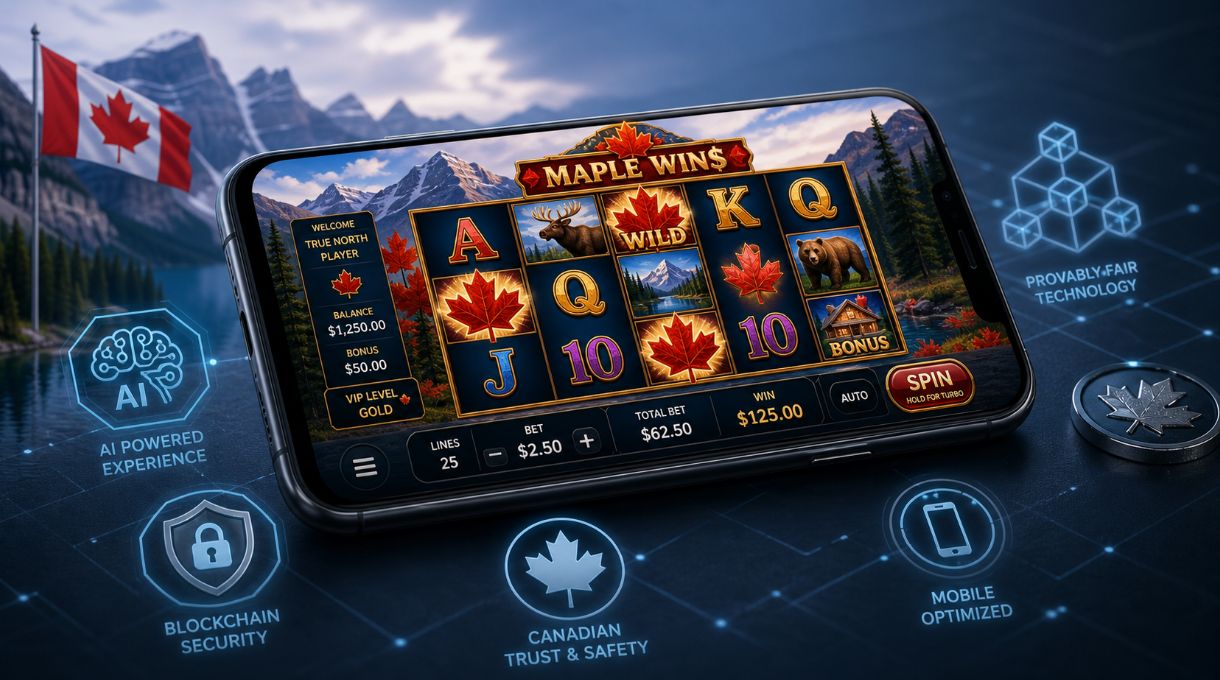
Online slots have become one of the most dynamic parts of the Canadian iGaming market, and technology is the main engine behind that rise. From mobile-first design to AI-driven personalization and blockchain security, every layer of the modern slot experience has evolved to match how Canadians play, pay, and stay safe online.
Across provinces, this tech shift is changing not only where people spin the reels, but how they interact with casinos, bonuses, and responsible gambling tools. For Canadian players, the result is a smoother, more immersive, and safer environment than ever before.



Mobile-First Slots: Canada’s On-the-Go Casino Floor
The biggest driver of online slots growth in Canada is the move to mobile. With the majority of Canadian adults now using smartphones and enjoying reliable 4G and 5G coverage, phones and tablets have become the default way to access casino games.
Instead of being tied to a desktop, players open a browser or app and dive into hundreds of slot titles in seconds. Modern casino platforms use HTML5 technology so games run directly in the browser on both iOS and Android, without any extra downloads. This keeps gameplay consistent whether someone is spinning reels on a laptop at home or on a phone during a commute.
Developers also rely on advanced graphics engines like WebGL and Unity to optimize slot visuals for smaller screens, delivering sharp 3D graphics, crisp animations, and smooth frame rates even on mid-range devices. Cloud infrastructure supports this by handling data-heavy processes on remote servers, which reduces lag, improves stability, and allows secure, real-time transactions across Canada’s vast geography.
Provincial frameworks amplify mobile adoption. In Ontario, where a regulated iGaming market launched in 2022, licensed operators must meet clear technical and responsible gambling standards on mobile. British Columbia and Quebec also support online play through their own platforms, helping to normalize mobile slots as a mainstream form of entertainment rather than a niche product.
Social and competitive features are layered on top of this mobile foundation. Leaderboards, daily missions, free-spin calendars, and slot tournaments keep players returning for short, frequent sessions. Integrations with live streaming and influencer content speak directly to younger Canadians who want gaming to feel social, not solitary.
AI-Powered Personalization: Slots That Adapt to Canadian Players
Artificial intelligence is now one of the most influential technologies behind the growth of online slots in Canada, because it reshapes each session around the individual rather than serving a generic experience to everyone. By analyzing gameplay history, bet sizes, preferred volatility, and the types of themes a person gravitates toward, AI tools can recommend games that feel naturally aligned with their tastes.
For example, a Canadian player who favours high-volatility adventure slots with complex bonus rounds may increasingly see similar titles highlighted in the lobby, often paired with bonuses designed for that risk profile. Another player who prefers low-volatility, classic three-reel slots might be guided toward more straightforward games with frequent small wins, making their sessions calmer and more predictable.
Machine learning models go beyond recommendations. In some cases, AI can adjust certain configurable aspects of the experience in real time, such as the frequency of specific features, the presentation of bonus offers, or the pacing of in-game events, while still respecting fixed RTP and legal requirements. The goal is to keep play engaging without making it overwhelming or confusing.
This same technology is essential for responsible gambling. AI systems monitor for warning signs such as unusually long sessions, frequent attempts to increase deposit limits, or patterns that look like chasing losses. When those signals appear, platforms can trigger tailored interventions: reminders about available tools, prompts to set limits, reality checks, or even optional cooling-off suggestions.
In regulated environments like Ontario, where the iGaming framework requires strong player protection measures, these AI-driven safeguards are becoming standard. Similar expectations are emerging in other provinces as governments and operators work to balance innovation with harm reduction.
AI chatbots also handle a growing share of customer support, answering questions about withdrawals, bonuses, or provincial rules in English and French at any time of day. Faster answers and less friction help reduce churn, especially for mobile users who expect instant assistance.
Below is a sample of how AI tools influence engagement and safety, based on industry reporting:
Taken together, these tools help Canadian platforms create environments where online slots feel curated and convenient, while still anchored by safety and transparency.
Security, Blockchain, and Payments: Building Trust Around Every Spin
Trust has always been a deciding factor for Canadians choosing where to play online, and here too, technology is reshaping the picture. Advances in encryption, payment processing, and blockchain are giving players more confidence in both the fairness of the games and the safety of their money.
Modern online casinos rely on Random Number Generators to produce unpredictable outcomes, and independent testing labs verify that these RNGs are working as intended. Blockchain-based verification can add another layer, making spin results and jackpot triggers auditable on a decentralized ledger. That makes manipulation far more difficult and gives tech-savvy players a way to confirm that outcomes are genuinely random within the game’s design.
On the payment side, Canadians now have access to a wide variety of options beyond traditional cards, including e-wallets, direct banking methods, and, at some sites, cryptocurrencies. Deposits and withdrawals are typically processed through secure gateways that use strong encryption to protect personal and financial data. Some regulated operators supplement this with biometric login methods such as fingerprint or facial recognition on mobile devices, adding another security barrier against unauthorized access.
Where cryptocurrencies are supported, blockchain makes transfers faster and, in some cases, more private, which appeals to players who value anonymity. Smart contracts can automate the distribution of progressive jackpots, loyalty rewards, or tournament prizes, ensuring these payouts are executed exactly as promised and recorded immutably.
Regulators in provinces like Ontario and British Columbia expect operators to invest heavily in anti–money laundering protocols, identity checks, and transaction monitoring. Blockchain tools can assist by keeping tamper-proof logs of activity that help platforms demonstrate compliance and protect the wider financial system.
For players, the visible result is a smoother, more trustworthy payment flow where deposits clear quickly, withdrawals are processed within clear timeframes, and account security tools are prominently available. That level of reliability is one reason online slots are becoming part of everyday digital entertainment for many adults in Canada.
Immersive Tech: VR, AR, and the Next Level of Slot Design
While most Canadians currently enjoy slots on standard screens, virtual reality and augmented reality are rapidly transforming what “online” casino play looks like. These technologies are still emerging, but early implementations hint at how deeply they can change the feel of spinning the reels.
VR slots place the player inside a fully rendered 3D casino environment, where they can walk through virtual halls, sit at themed machines, and pull digital levers surrounded by cinematic sound and lighting. Headsets that were once niche are becoming more affordable, and 5G connectivity helps stream high-quality visuals with minimal lag. This makes VR a realistic option for Canadian players who want a social, immersive experience without travelling to a land-based venue.
AR, by contrast, keeps players in their real surroundings but overlays slot interfaces and animations on top of them through a phone camera. A kitchen table can become a virtual reel set; a living room can host a pop-up jackpot animation. Because AR runs on existing smartphones and tablets, it side-steps the hardware barrier that VR still faces and fits naturally into mobile-first behaviour.
Developers are experimenting with multiplayer VR lobbies where Canadian players can celebrate big wins together, and AR-based treasure hunts that turn bonus unlocking into a location-aware mini game. These approaches tap into the same collaborative instincts that fuel social gaming and esports communities.
The technical stack behind these experiences is demanding. Game engines render detailed environments, cloud servers handle real-time interactions, and high-bandwidth networks keep everything synchronized. As more of this infrastructure rolls out across Canada, especially in urban centres and tech hubs like Vancouver, Montreal, and Toronto, VR and AR slots are expected to become more common on mainstream casino platforms.
Cloud Infrastructure and Game Engines: The Hidden Backbone of Canadian Slots
Behind every polished slot experience is a complex mix of servers, software, and networking tools that most players never see. Cloud computing is central to this backbone, allowing operators to scale capacity up or down depending on traffic, launch new games quickly, and handle spikes during major events or promotions.
For Canadian-facing casinos, distributed data centres help keep latency low from coast to coast, which is especially important for fast-paced games and live features. CDN (content delivery network) technology ensures graphics, sounds, and updates reach devices quickly, even during peak evening hours when many players log in.
On the development side, modern engines let studios build cross-platform slots that run consistently on desktops, mobiles, and, increasingly, VR or AR devices. That means a player can start a session on a laptop in Alberta, continue on a phone in Ontario, and see the same visual quality, saved progress, and account data.
Regular updates are pushed seamlessly through these systems: new bonus mechanics, seasonal themes tailored to Canadian events, and performance optimizations all arrive without any manual effort from the user. This constant iteration keeps the slot catalog feeling current and gives operators more ways to localize content for Canadian tastes.
Responsible Gambling and Regulation: Technology as a Safety Net
As online slots become more prominent, responsible gambling tools are critical to keeping the experience sustainable. Here, technology is not just an add-on; it is woven into the regulatory fabric across Canadian jurisdictions.
Licensed operators in provinces such as Ontario must provide clear options for setting deposit limits, loss limits, session reminders, and self-exclusion. These tools are fully integrated into websites and apps so players can adjust them in seconds from mobile or desktop.
AI plays a central role in this safety net by tracking indicators of potential harm and alerting teams or automated systems when thresholds are crossed. Messaging can be tailored based on a person’s history, making it more likely that they will respond constructively.
Educational content also benefits from modern UX and content design. Rather than burying information in long PDF documents, many platforms now present responsible gambling tips through interactive modules, short videos, or quick FAQ sections that fit naturally within the gaming environment.
The result is a more transparent ecosystem where Canadians can see licensing details, payout information, and help resources at a glance before they ever make a deposit. This transparency, reinforced by both regulation and technology, strengthens trust and supports the long-term health of the online slots sector.
Canada’s Online Slots Future: Innovation, Local Flavor, and Sustainable Growth
All these technologies – mobile platforms, AI personalization, blockchain security, immersive VR and AR, and scalable cloud infrastructure – are converging to push Canadian online slots into a new phase of growth. As provincial rules evolve and more operators enter the domestic market, competition is shifting toward quality, safety, and user experience rather than just bonus size.
For players, that means more diverse libraries of games with themes that reflect Canadian culture, from hockey and wilderness adventures to Indigenous-inspired art created in partnership with local communities. For the industry, it means steady investment in fintech, cybersecurity, AI, and game design roles, contributing to a broader digital economy.
Looking ahead to the coming decade, forecasts point to continued expansion in Canadian iGaming revenue as technology makes online slots more accessible, more engaging, and more responsible at the same time. With each new wave of innovation, the classic thrill of spinning the reels is being reimagined for a connected, mobile-first generation across the country.