As a casino review expert, my usual role is to guide you toward the best games, the highest RTPs, and the most thrilling platforms. However, the most important “pro tip” in any gambler’s arsenal isn’t about how to win—it’s about knowing how to stop. In Canada, where the iGaming landscape is expanding rapidly from Ontario to BC, the responsibility to play smart has never been more critical.
Treating gambling addiction isn’t about a lack of willpower; it’s about recalibrating the brain’s reward system and reclaiming control over your financial and emotional well-being. This guide is a candid, expert-led deep dive into identifying the signs of problem gambling and the concrete steps Canadians can take to seek help and heal.

The Hard Truth: Understanding Gambling Addiction
In the industry, we often talk about “House Edge.” Addiction is the ultimate house edge—it’s the point where the game is no longer playing you; you are being played by a chemical loop.
Gambling addiction, or Ludomania, is recognized as a clinical impulse-control disorder. When you gamble, your brain releases dopamine, the “feel-good” neurotransmitter. For some, the brain begins to crave this dopamine hit so intensely that it overrides the logic of financial loss. This is why “chasing losses” is so dangerous; it’s an attempt to fix a financial problem using the very thing that created it.
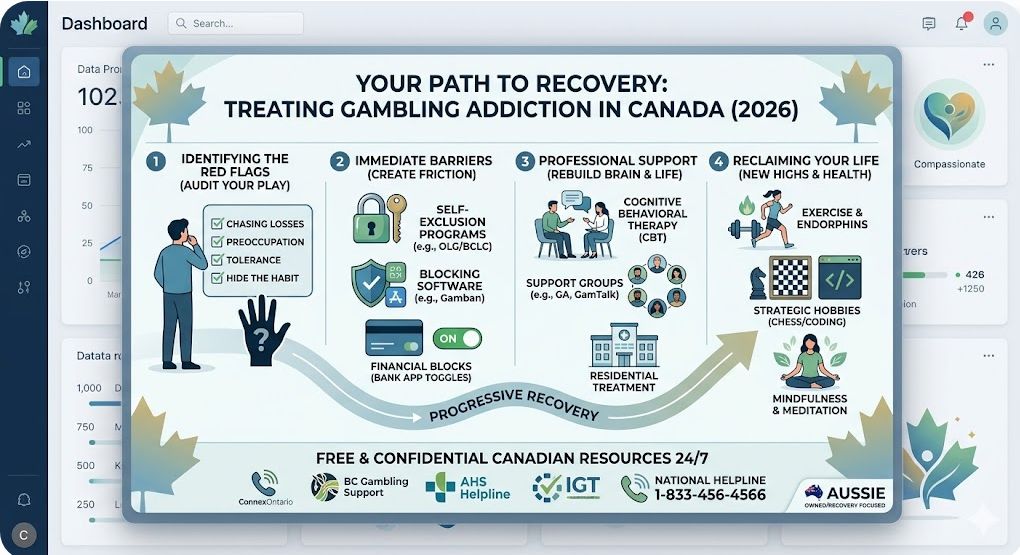
Step 1: Identifying the Red Flags
The first step in treatment is an honest audit of your behavior. In Canada, many players transition from social “betting on the Leafs” to isolated, compulsive play without realizing the line has been crossed.
The Warning Signs:
-
Chasing Losses: Returning the next day to win back what you lost.
-
Preoccupation: Constantly thinking about your next bet or how to get gambling funds.
-
Tolerance: Needing to bet larger amounts of money to feel the same level of excitement.
-
Withdrawal: Feeling irritable, restless, or anxious when you try to cut down or stop.
-
Escapism: Using gambling to avoid stress, anxiety, or depression.
-
Hiding the Habit: Lying to family members about the extent of your play or your financial situation.
Step 2: Immediate “Firewall” Strategies
If you recognize these signs, the “cool-down” phase begins immediately. You need to put friction between yourself and the “Spin” button.
1. Self-Exclusion Programs
Canada has some of the most robust self-exclusion frameworks in the world.
-
Ontario (iGaming Ontario): You can register to be blocked from all regulated sites in the province simultaneously.
-
BCLC (GameBreak): For players in British Columbia.
-
Atlantic Lottery: Regional programs for the East Coast. Once you self-exclude, your account is locked, and the casino is legally prohibited from sending you marketing materials.
2. Blocking Software
Install specialized software that acts as a digital barrier. Tools like Gamban, BetBlocker, or GamStop work at the device level to block access to thousands of gambling sites and apps worldwide.
3. Financial Barriers
Contact your bank (TD, RBC, Scotiabank, etc.) to request a gambling block on your debit and credit cards. Many Canadian banks now offer a toggle in their mobile apps that instantly declines any transaction categorized as “Gambling.”
Step 3: Professional Treatment Options in Canada
Addiction thrives in isolation. Breaking the cycle often requires outside expertise.
Cognitive Behavioral Therapy (CBT)
CBT is the “gold standard” for treating gambling addiction. It works by identifying the “distorted thinking” patterns that lead to gambling. For example, a therapist helps you dismantle the “Gambler’s Fallacy”—the belief that a win is “due” because you’ve lost several times in a row.
Support Groups (Peer-to-Peer)
-
Gamblers Anonymous (GA): A 12-step program similar to AA. Sharing experiences with others who have been in your shoes is incredibly cathartic and reduces the shame associated with debt and loss.
-
GamTalk: An online community where Canadians can chat anonymously and find resources.
Residential Treatment
In severe cases, a “rehab” or residential treatment center might be necessary. Facilities like Bellwood Health Services in Toronto or specialized programs in Vancouver provide intensive, 24/7 support to reset the brain’s environment.
Step 4: Rebuilding Financial Health
For many, the addiction is fueled by the crushing weight of debt. Dealing with the money is part of the therapy.
-
Hand over the keys: Temporarily give control of your finances to a trusted partner or family member.
-
Credit Counselling Canada: Seek out non-profit credit counselors who can help you consolidate gambling debt and negotiate with creditors without taking out more loans.
Step 5: Finding New Highs (Neuroplasticity)
The brain needs a replacement for the dopamine it used to get from the casino. This is the “recovery” phase. Many former gamblers find success in:
-
High-Intensity Exercise: Releases natural endorphins.
-
Strategic Hobbies: Chess, gaming (non-monetized), or coding provide the mental stimulation and “problem-solving” itch that pokies often mimic.
-
Mindfulness and Meditation: Learning to sit with the “urge” until it passes, rather than acting on it.
Resources for Canadians
If you or someone you love is struggling, help is a phone call away. These services are free, confidential, and available 24/7.
Final Expert Verdict: The Path to Recovery
Recovery isn’t a straight line. There may be slips, and there may be days when the urge feels overwhelming. But as a casino expert, let me tell you this: The only way to truly “beat the house” is to stop playing their game.
Real winning isn’t found in a jackpot; it’s found in the peace of mind of a balanced bank account and the trust of your family. If you’re ready to stop, Canada has the infrastructure to catch you. Take the first step today—self-exclude, call a helpline, and reclaim your life.